Registration And Lobby Branding is easier to manage when venue access windows are checked before freight leaves storage.

Tampa / Florida
Venue-led trade show display planning for the bay-area event calendar.
813-946-8577info@tradeshowdisplaystampa.comStart the display briefServices
Registration And Lobby Branding
Registration And Lobby Branding sits close to one coordinated rental scope in Tampa. Convention halls, waterfront hotels, sponsor environments, and regional expo dates all push the booth in different ways, so Registration And Lobby Branding changes how the room, the schedule, and the sales rhythm line up once the event becomes real.
Read that way, Registration And Lobby Branding influences graphics, counters, demo surfaces, lighting, and meeting areas just as much as it influences delivery, material handling, install, supervision, dismantle, and return shipping. That is usually where exhibitors feel the difference between a booth that merely occupies space and one that is genuinely ready to work.
- Tampa
- Services
- Display Planning
- Show-Site Support
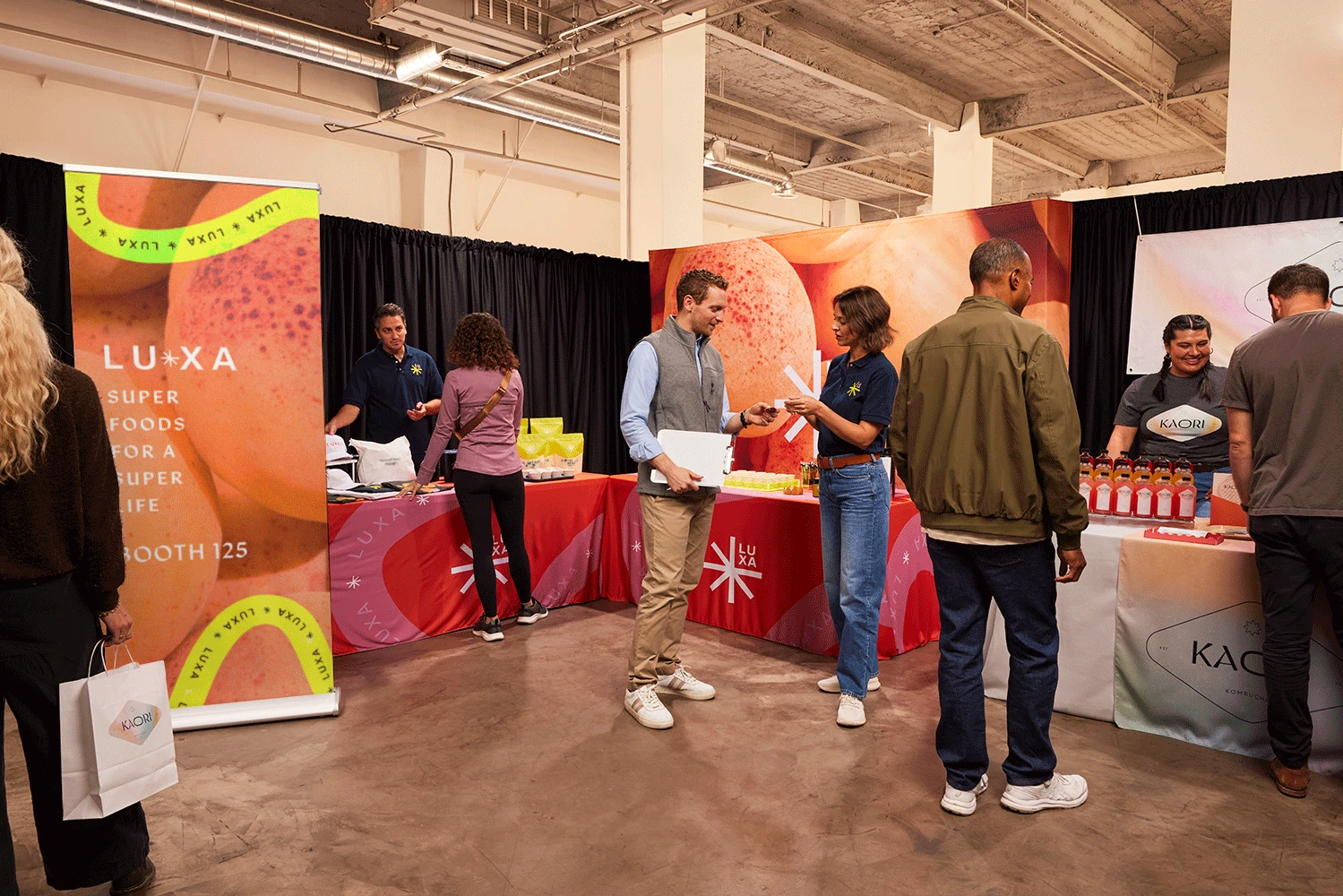
Registration And Lobby Branding reads more coherently when graphics, hardware, AV, and furniture are scoped together.
During Tampa show weeks, Registration And Lobby Branding often changes labor pacing, staging space, and the amount of floor support the booth needs.
Part
Registration And Lobby Branding on the Tampa show floor
Registration And Lobby Branding becomes real the moment the room opens and the booth has to do the job it was rented to do. Some Tampa exhibitors need fast aisle pull and quick qualification. Others need room for deeper product explanation, calmer meetings, or a display that can carry a more technical conversation without feeling crowded. Registration And Lobby Branding changes which of those moments the booth is built to support, and that decision leaves a mark on everything from graphic hierarchy to how visitors enter the space.
That is why Registration And Lobby Branding belongs in the earliest scope conversations. Once the exhibitor is clear on how the booth must perform, it becomes easier to decide how visible the message needs to be from distance, what belongs near the front edge, and how much of the brand story should live in graphics versus staff interaction. The cleaner those choices are, the less often the rental scope drifts toward pieces that look useful on paper but do very little once the event is busy.
- Registration And Lobby Branding matters most when it is settled before graphics, labor, and freight are being finalized.
- In Tampa, Registration And Lobby Branding usually changes labor timing, storage choices, and how much show-site supervision the booth needs.
- Tampa Marriott Westshore offers a useful second angle when the team wants another view on a cleaner budget and a booth team that is not chasing missing parts during show week.
Part
How the booth needs to behave
Once Registration And Lobby Branding is in view, the booth format starts to settle into place. Visibility, storage, conversation zones, demo surfaces, counters, and circulation all have to work together. Tampa exhibitors usually feel this most when they start placing product tables, monitors, hospitality, and hidden storage in the same footprint. A layout that looks generous in theory can feel surprisingly cramped once every practical element is accounted for.
Format also changes the crew experience. Larger lightboxes, hanging signs, custom counters, and multi-zone footprints demand a different install sequence than a smaller modular setup or a repeatable conference package. That shift affects power planning, staging, freight, and how long the booth stays composed once attendees begin leaning on counters, moving chairs, or asking staff to demonstrate something in the middle of live traffic.
Part
Graphics, demos, and message clarity
Graphics around Registration And Lobby Branding work best when each surface has a clear job. The backdrop catches the room. The counter reinforces the pitch. The monitor supports proof. Smaller panels explain what a visitor cannot absorb in two seconds while walking the aisle. When those jobs are blurred together, the booth often ends up saying too much at once and the message loses force even though plenty of material was produced.
Tampa schedules make that clarity even more valuable because print deadlines, replacement graphics, lighting checks, and final approvals often stack against freight timing. A tighter graphics plan keeps graphics, counters, demo surfaces, lighting, and meeting areas connected to the real operating plan, which is what allows the finished environment to look deliberate instead of pieced together from good intentions and late revisions.
Part
Freight, access, and crew timing
Registration And Lobby Branding also reaches into the part of the job that never appears in a hero render: the warehouse deadlines, carrier calls, marshaling rules, loading docks, and the order in which pieces need to hit the floor. Those decisions shape how calm or chaotic move-in feels in Tampa. A booth with too many loose elements, mismatched packing, or poorly grouped electrical and AV parts can lose time before the first structure is even standing.
That is why freight planning is usually read backward from the moment the booth needs to be fully camera-ready. Graphics finishing, quality checks, crate order, direct-to-show shipments, advance warehouse timing, and labor call lengths all have to support the same sequence. When they do, the crew uses the final hour for styling and testing instead of hunting through cases or correcting avoidable packing mistakes.
Part
What exhibitors notice during live hours
During the event, exhibitors feel Registration And Lobby Branding in smaller ways that matter. They feel it in whether meetings can happen without blocking the aisle, whether samples and literature stay easy to reach, whether cables and backup stock stay hidden, and whether the booth still looks cared for after hours of use. These details rarely announce themselves when they are handled well. They simply make the booth seem calmer, clearer, and easier to work.
The same is true of labor planning. A stronger booth lead, a cleaner reset routine, and a crew sequence that reflects the actual build complexity all protect the selling day. Tampa events run long, and even attractive exhibits can start looking tired if there is no plan for upkeep, quick corrections, or how the staff will recover the space after each traffic wave.
Part
Why Registration And Lobby Branding still matters after the doors close
Registration And Lobby Branding still matters after the event because it affects what can be reused, what needs to be refreshed, and how expensive the next date becomes. Smart rental programs keep the strongest pieces in play while letting the exhibitor change graphics, merchandising, or supporting hardware as the room and audience shift. That is usually where cost discipline and quality control stop competing with each other and start working together.
It is also why comparing Interactive Demo Station Builds, Registration And Lobby Branding, Exhibitor Appointed Contractor Support, and Tampa Marriott Westshore can be so useful when a Tampa assignment is still taking shape. Each section throws a different light on the same booth: the room, the format, the workload, or the audience. The clearest rental decision usually comes from seeing where those views overlap. That is the path that most often leads to a cleaner budget and a booth team that is not chasing missing parts during show week.
Part
Tampa as a trade show city
Exhibiting in Tampa means working inside an established event ecosystem. The venues, the labor model, and the local production capacity all behave in predictable patterns.
Exhibitors pulling back on budget in Tampa still have to show up in the same booth neighborhoods as their competitors. Scope gets tighter; standards don't. The booths that land well are the ones built on a specific plan, not a standard layouts.
Florida State Fairgrounds markets a multi-venue event campus with indoor and outdoor inventory, including the Expo Hall and Florida Center, which broadens Tampa's event mix beyond the downtown waterfront cluster — a useful reference point when sizing a project.
Grand Hyatt Tampa Bay is less than 3 miles from Tampa International Airport and offers over 30,000 square feet of meeting space, while Tampa Airport Marriott lists 25,766 square feet of event space inside the airport campus.
Part
Tampa convention venues and meeting properties
Every Tampa show takes place in a specific building with its own rules. The venues below come up most often on our production calendar.
Across the Tampa venue set, what changes between buildings are the labor model, the rigging approval path, the drayage setup, and the published move-in window. The plan has to match the specific building.
The Westin Tampa Bay: the Westin Tampa Bay in Rocky Point with 10,000 square feet of meeting space, a largest room of 3,200 square feet, 9 meeting rooms, 244 guestrooms.
Tampa Convention Center. Visit Tampa Bay’s convention center section describes the Tampa Convention Center as a 600,000-square-foot waterfront meeting and convention facility.
Florida State Fairgrounds is one of the anchors. Planners can choose from Expo Hall, TECO Arena, Entertainment Hall, equestrian rings, and outdoor event areas ranging from 5,000 to 87,000 square feet.
Part
Tampa labor and venue services
There is no single labor model for Tampa trade shows. The right approach depends on the specific venue and the show organizer's contracts.
The workable version of Tampa labor planning is boring on purpose: read the manual, match the scope to its categories, order what the venue sells directly, and schedule everything else around its posted windows. Surprises almost always trace back to a step someone skipped.
City of Tampa service-partner materials route food and beverage to Aramark, utilities to Edlen, internet and telecom to Smart City, AV and exclusive rigging to Encore, security to Sentry Event Services, and print and shipping services to FedEx Office.
Part
Tampa neighborhoods and event districts
The East Tampa Fairgrounds Corridor area runs through East Tampa, Fairgrounds Corridor, Brandon, Seffner. Supports expos, public shows, and programs that benefit from larger back-of-house movement, more forgiving loading, and multi-building campus operations.
Bay-to-Beach Spillover — St. Petersburg, Clearwater, Clearwater Beach — is a different environment. Relevant for coastal meetings, hospitality-heavy programs, and clients who still rely on Tampa for exhibit execution through the broader trade-show market.
Part
Line items on a typical project
A full engagement covers scope development, fabrication or rental, graphics, show services, logistics, and on-site execution from move-in through dismantle.
What shows up in most budgets: structure, graphics, AV, show-service orders through the venue, labor, freight, supervision days, and closeout. Individual projects layer or remove items based on scope.
The handoffs on a registration and lobby branding project matter almost as much as the line items. Design has to hand a build-ready drawing to fabrication. Fabrication has to hand a pre-built, dry-fitted booth to crating. The crater has to hand a labeled, manifested shipment to the carrier. Every handoff is a place quality can drop.
Multi-show programs add asset management: storage, refurbishment, graphic swaps, and scheduled re-kitting so the booth rolls cleanly from Tampa to the next city on the calendar.
A clean scope definition also calls out what isn't included: show organizer fees, client staff travel, and anything the client already has under contract (lead capture platforms, CRM integrations, promotional giveaways). Those run alongside the engagement rather than inside it.
Part
The process from start to finish
Every project starts with a scope conversation: the show, the venue, the booth number, the dates, and the budget frame. Ten minutes of specifics produces a better plan than a week of generalities.
Once scope is clear, the venue work begins. Exhibitor manual, dock times, utility order IDs, rigging submissions for hanging elements, and labor calls all get locked against the venue's actual rules.
Production brings the plan into physical form: fabrication, graphics, AV, rentals, and the named lead who will run the floor.
One named show-site lead runs the install. Not a rotating crew and not a remote account manager — one person holds the floor plan, the punch list, and the labor calls from crates to doors.
Show-hours coverage is part of every engagement — not a premium add-on. On-floor support keeps the booth running while the client team runs the pipeline.
Closeout is tight: strike, crate, manifest, storage designation, and a written post-show report delivered within a day. That document drives the next booking.
Part
Cost and lead time
An honest quote itemizes the variables. There is not a single price — there is a configuration.
Cost scales with how it is built, how big it is, what the venue charges for its own services, what the graphics look like, how far the crates travel, and how many days the team stays on-site.
On timing: custom builds for Tampa shows run best with 16 to 20 weeks of lead time. Rental programs run on 8 to 12. Anything inside 4 weeks is a rush, which means fewer options and a premium on materials.
Part
What a successful project looks like
A project runs well when install clears the venue's published window, all show services land as ordered, the booth performs across every show day without pulling the client team off pipeline work, and strike clears the dock before the next occupant loads in.
Trade show ROI is measured at the lead and pipeline level. The show-floor execution either protects or undermines those numbers.
The post-show debrief is where the numbers get connected back to the physical booth. Which demo station drew traffic, which meeting area closed more conversations, which graphic zone attracted dwell time — that feedback shapes the next build rather than getting lost.
Part
Why Trade Show Displays of Tampa
Trade Show Displays of Tampa is Tampa's local trade show team, with in-house design, fabrication, graphics, and show-site crews. One shop, one point of contact, one accountable lead on every project.
Local fabrication means real-time problem-solving. A graphic that needs to be reprinted at 6 a.m. on install day is a same-morning fix, not a three-day shipping delay.
Clients who run repeat programs across multiple dates end up paying less per event when the same team handles everything. Less re-briefing, less re-training, less re-checking — the operational overhead drops year over year.
Part
Registration And Lobby Branding planning questions
Q: Do you work at Hilton Tampa Downtown?
Yes. Hilton Tampa Downtown in Downtown Tampa with 31,056 square feet of meeting space, a largest room of 14,504 square feet, 27 meeting rooms, 520 guestrooms. It is relevant for conferences, exhibitor meetings, sponsor hospitality, and off-floor event programs tied to Tampa shows. Projects at that building are planned against its specific floor rules.
Q: How does labor work in Tampa?
It runs venue by venue. City of Tampa service-partner materials route food and beverage to Aramark, utilities to Edlen, internet and telecom to Smart City, AV and exclusive rigging to Encore, security to Sentry Event Services, and print and shipping services to FedEx Office. Other Tampa venues have their own published rules, and the plan matches the specific building.
Q: How much lead time is ideal?
Custom builds run best with 16 to 20 weeks of lead time. Rentals take 8 to 12 weeks. Work inside 4 weeks is possible but raises costs and narrows the options.
Q: What information kicks off a project?
The show, the venue, the booth number, the dates, and a target budget range. From those, an initial scope and a realistic cost come back within a few days.
Q: Who runs the booth on-site?
One named show-site lead runs the install, the show hours, and the strike. That person carries the floor plan and the punch list from crates to doors and reports up once a day.
Q: Can the booth travel to the next city on our calendar?
Yes — builds are designed for modular reuse unless single-use scenic is specifically required. Same structure, swappable graphics, standard crates. Tampa programs that roll to another city on the same calendar get handled end to end.
Q: What happens if something breaks during show hours?
The show floor lead handles it. Minor repairs happen in place; anything larger gets sourced from the local fabricators or rerouted through the venue's service desk.